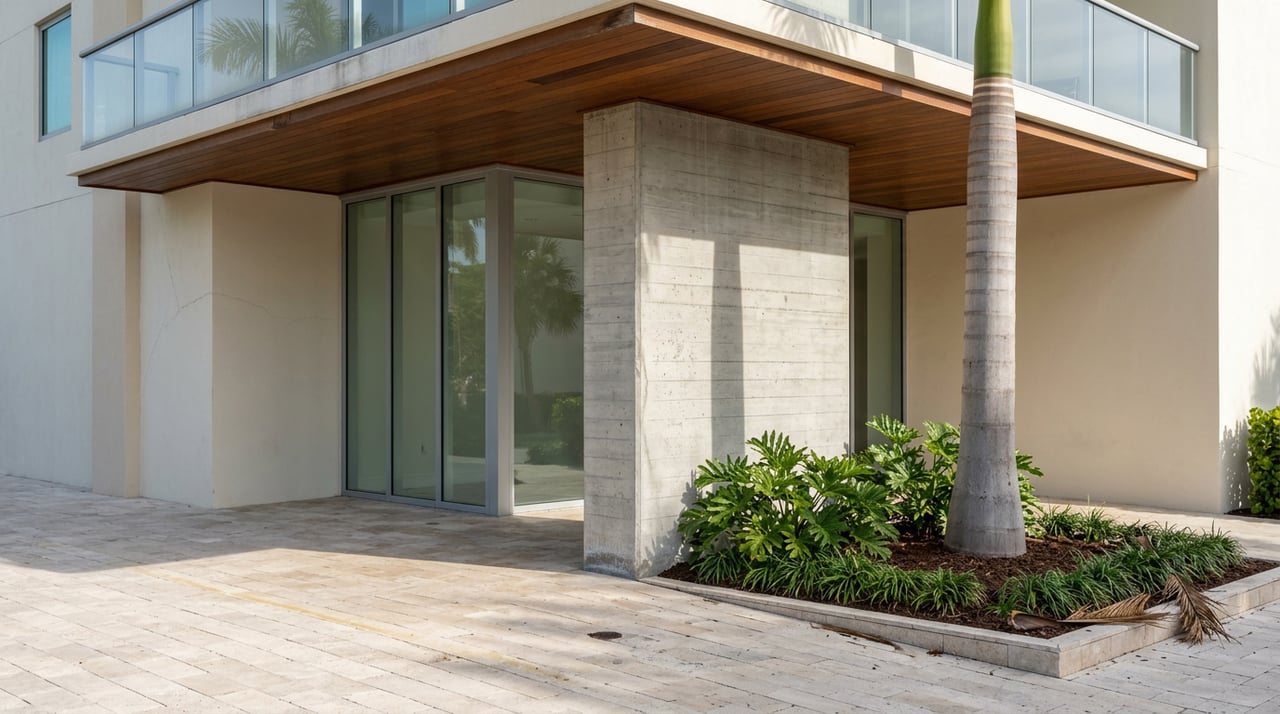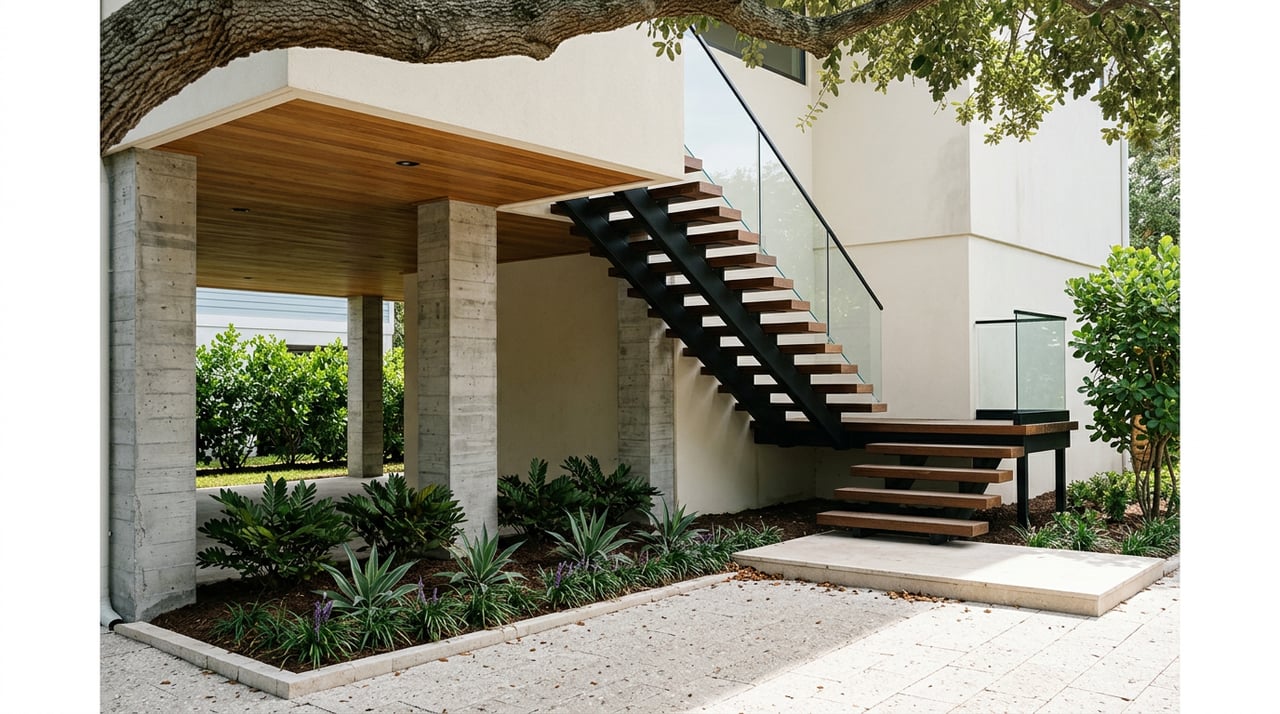
Thirty homeowners have already asked the Town of Longboat Key for permission to put their existing houses on stilts. That number, disclosed at the June 22, 2026 Town Commission workshop, is the quiet backdrop to almost every older-home transaction on the island this summer. If you are shopping a mid-century ranch on a canal, or a 1970s bayfront that came through Helene and Milton with cosmetic damage only, the list price is not the price. The price is the list price plus the elevation project the next owner is likely to inherit.
The Town wants that project to happen. Its own zoning code, in many cases, does not. That gap is the mechanism buyers keep discovering at inspection instead of at offer.
"We really do want to see more properties elevating. Water levels are continuing to be a concern. But we have certain properties, especially the smallest ones, that create some challenges when it comes to elevation." — Town Manager Howard Tipton, June 22, 2026 workshop
The number under the number
Longboat Key's 2026 single-family median sits above $1.9M, with an average of 82 days on market. Those are the figures buyers see on the portals. They are not the figures that decide whether an older home is a bargain or a trap.
Here is the stack a serious buyer of a pre-elevation home should build before writing an offer:
| Line item | Typical 2026 range | Notes |
|---|---|---|
| Raise the lot (no stilts) | ~$100,000 | Builder-owner example on Longboat Drive North |
| Full house lift on pilings | Six figures, up | Includes utility disconnects, steel beams, pilings, new stairs or ramp |
| Combined wind + flood, $2M SFH | $15,000–$25,000/yr | AE zone; VE runs higher |
| Combined wind + flood, waterfront | $10,000–$30,000+/yr | Depends on elevation certificate and construction |
| Seawall repair or replacement | $500–$1,200 per linear foot | If the property has one |
Median price plus 15 years of insurance plus a stilts project is a very different affordability calculation than the MLS card suggests. A property one foot below Base Flood Elevation and a property three feet above it can sit on the same street at similar list prices and have almost nothing in common as long-term holdings.
Where the Town's own code fights the elevation
Planning Director Allen Parsons walked commissioners through the friction points at the June workshop. The pattern is consistent: a homeowner tries to lift, and the very act of lifting knocks the property out of compliance with a rule that had nothing to do with elevation.
- Setbacks and lot coverage. When a house goes up, the platforms holding air conditioners and utility meters go up with it. Those platforms count toward lot coverage, which pushes small lots over the limit.
- Daylight plane. Former Mayor Ken Schneier's spouse, Commissioner Maureen Merrigan Bishop, described being penalized on a garage build because a lift-station right-of-way sat on the property line, casting a shadow rule onto land that will never hold a structure.
- Pool grading. A six-inch grade change at the house can force an eight-inch rim around an existing pool, and that rim triggers a setback requirement that can make a rebuilt pool nearly impossible on the original footprint.
- Wide rights-of-way. Parts of Buttonwood Drive exceed 60 feet in width, and that width eats into the buildable envelope of every lot fronting it.
- The variance path. Right now, a homeowner who cannot meet setback, lot coverage, daylight plane, pool grading, or utility elevation while lifting must file for a Zoning Board of Adjustment variance based on hardship or unique circumstances. That is a public hearing, not a permit clerk sign-off.
Bishop framed the trajectory bluntly to commissioners, warning that homes left at grade become projectiles in a major storm and that the next ten to twenty years of Longboat Key will look like elevated neighborhoods whether the code catches up or not.
What the June 22 workshop actually changed, and what it did not
The workshop was a conversation, not a vote. No code amendment was adopted. Parsons floated the idea of exempting like-for-like lifts, where the existing structure is simply raised rather than expanded, from the variance track, and of giving staff authority to grant certain exceptions administratively. Both ideas need to go to the planning and zoning board before they become rules.
For a buyer under contract this summer, that means the ZBA process is still the default. Any older Longboat Key home you are considering, on a small lot or a canal lot in particular, should be underwritten against today's code, not tomorrow's possible amendment. If the amendment lands, it lands as upside.
The Town's flood risk data itself is public and unusually accessible. The Town partners with Forerunner to publish each property's flood zone, Base Flood Elevation, and Design Flood Elevation, along with any Elevation Certificates on file. That lookup takes two minutes and is worth doing before a second showing.
Reading a Longboat Key listing with the elevation math on
Serious buyers on the island in 2026 are running the same short checklist before they get emotionally attached to an older home:
- Pull the Forerunner profile. Confirm flood zone (AE vs VE matters), BFE, and whether an Elevation Certificate is on file. A one-foot deficit below BFE reads very differently than a three-foot cushion above it.
- Check the 50% rule exposure. If storm damage ever exceeds 50% of assessed value, the structure must be rebuilt to current FEMA elevation standards, not restored in kind. That is the trapdoor under every low, older house.
- Confirm the county. Longboat Key straddles Sarasota County (south) and Manatee County (north), and the line runs roughly across the island near the Longboat Key Club's northern boundary. Permit timelines, millage, and flood administration differ. North-end deep-water dock access at a lower entry price often comes with Manatee County process attached.
- Get real insurance quotes, not estimates. Private carriers have tightened on barrier-island risk since Helene and Milton. Bind numbers before you clear inspection, not after.
- Ask whether the seller has ever pursued a lift. If a ZBA file exists, read it. If the answer was no, understand why. That paper trail becomes yours at closing.
The two rebuild patterns on the island right now
Two real projects on Longboat Key show the fork. Eddie Abrams is building a raised-lot insulating concrete form home on Longboat Drive North after Hurricane Helene, and he estimates the lot raise alone at roughly $100,000. Michael and Kelly O'Brien on North Shore Road took the other path, lifting a 1,300-square-foot house twelve feet off the ground while preserving a floor plan they had spent eight years remodeling. Both projects clear the FEMA elevation requirement. Neither is cheap. Both were driven by owners who wanted to stay, not flip.
For an incoming buyer, the meaningful distinction is which pattern the specific lot supports. A tight interior lot may not accommodate the ramp or stairs a stilts project requires without a variance. A larger canal lot may take a raised-slab rebuild more gracefully than a lift. That is a question for a barrier-island-experienced inspector and a Town planner, in that order, before contract.
What is happening around the transaction this summer
The elevation debate is not the only signal moving. The Town started a water main replacement in Country Club Shores HOAs 1 through 3 on July 6, 2026, using a pipe-bursting technique that the Town of Longboat Key has posted on its official site. Across Sarasota Bay, three St. Armands Circle addresses are trading tenants in what the local paper called a game of musical chairs in shellfish, with Shore filing to rebuild as a fortified three-story flagship and flood-proof glass headed for at least one ground floor. Portofino Ristorante & Bar at the Longboat Key Club is closed for renovation through September 30, 2026. Guppy's Longboat Key at 5610 Gulf of Mexico Drive continues to fill the neighborhood-pub slot that opened after the 2024 storms.
Each of these is a small proof of the same thesis: the island is being rebuilt above the ground it used to sit on, and the tenants, homes, and buildings that adapt are the ones that will still be here in ten years.
FAQ
Do I have to lift a house I buy on Longboat Key? Not immediately. The 50% substantial-improvement rule applies when cumulative damage or improvement exceeds 50% of assessed value. Owners who never trigger that threshold are not compelled to elevate. Insurance underwriting, however, has been moving on its own timeline.
Is the code change likely to pass before the winter market? The June 22 discussion was a workshop, not a vote, and Parsons pointed the ideas toward the planning and zoning board. Assume today's ZBA variance track is still in effect through the fall selling window.
Where do I find the Base Flood Elevation for a specific property? The Town publishes it through Forerunner at longboatkeyfl.withforerunner.com. The Planning, Zoning & Building Department at 941-316-1966 handles follow-up questions on Elevation Certificates.
Does this apply to condos too? Condo buyers face a different but parallel exercise: Florida's structural integrity reserve studies under SB-4D, current reserve funding, and any approved or pending special assessments. The elevation question sits at the association level, not the unit level.
Reading a Longboat Key listing well in 2026 means reading the lot, the elevation certificate, and the Town's current code alongside the price. If you are considering an older home on the island and want a walkthrough that puts the elevation math on the table before you write an offer, Donna Wrobel works these transactions end to end. Let's Connect.