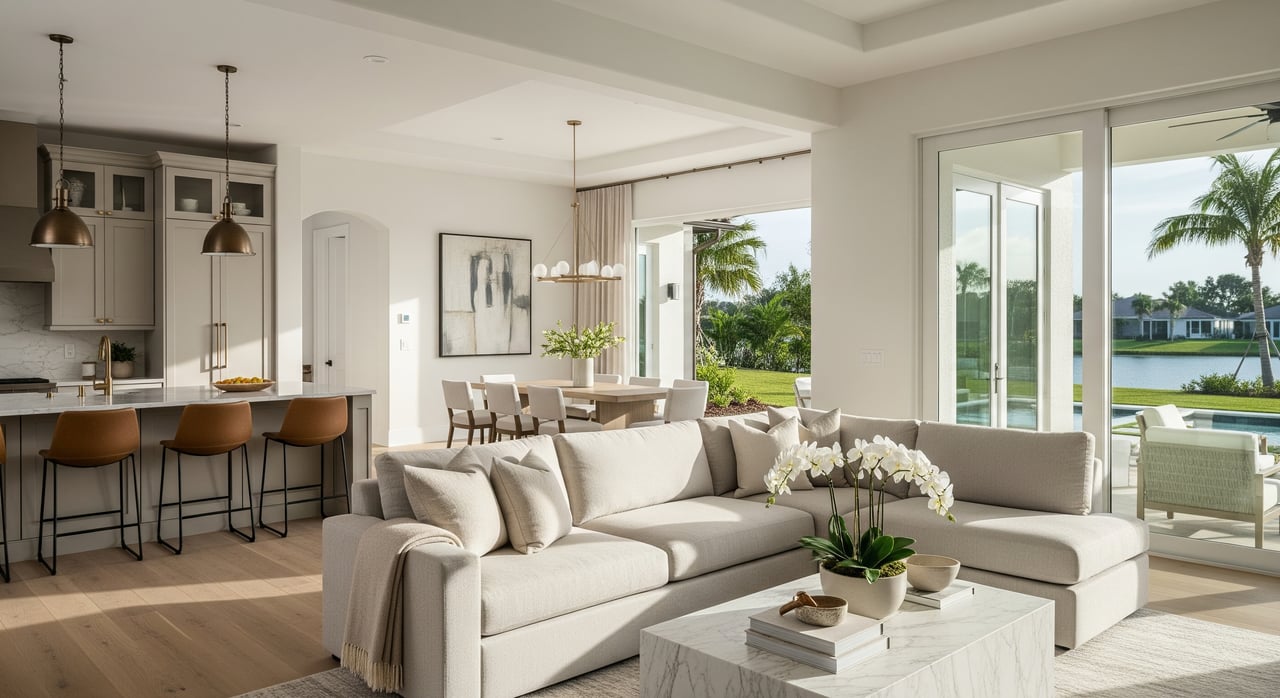
Are you deciding whether to list your Lakewood Ranch home with your furnishings in place or empty and fully staged? You want a smooth sale, strong photos, and the best offer, and the right staging approach can help you get there. In this guide, you’ll learn the difference between occupied and vacant staging, what each costs, when each works best in Lakewood Ranch, and how to plan timelines and logistics with confidence. Let’s dive in.
Occupied vs. vacant staging explained
Occupied staging means you live in the home while it is on the market and a stager uses your existing pieces with a few targeted additions. The focus is on decluttering, rearranging, and light styling so rooms feel bright and inviting in photos and in person. It is fast and budget friendly, and it lets you maintain daily routines.
Vacant staging brings in rental furniture and accessories to fully furnish empty rooms. This creates an aspirational, model-home look that photographs beautifully and helps buyers understand scale. It requires more budget and coordination, but the visual impact is often higher, especially in mid to upper price ranges.
There is also virtual staging, which digitally furnishes photos of empty rooms. It is inexpensive and quick for online presentation, but it does not help in-person showings.
When occupied staging wins
Occupied staging is usually your best first step when you want to minimize cost and list quickly. If your home is in good condition and already has solid core pieces, a consultation and a few updates can elevate photos within days.
In Lakewood Ranch, buyers often look for bright, low-maintenance living with a strong indoor-outdoor flow. Occupied staging can highlight these qualities by opening sightlines, adding light rugs or lamps, and simplifying surfaces so rooms feel fresh and spacious.
Consider occupied staging if:
- You need a quick turnaround and want to keep daily life running smoothly.
- Your price point is entry to mid-range for the neighborhood.
- You are comfortable removing personal items and following a checklist.
- The home’s bones and furnishings are already solid and just need polish.
Focus your efforts on high-impact areas: the main living space, kitchen, primary bedroom, and the lanai. Then address the dining area and any home office or flex space. Staging outdoor living is especially important in Lakewood Ranch where lanais and patios are a big part of the lifestyle.
When vacant staging delivers more
Vacant staging makes the most sense when the house is empty or will be unoccupied during marketing. Empty rooms can look smaller and colder on camera. Well-chosen rental pieces fix scale, create warmth, and help buyers visualize how to live in each space.
This approach shines for new or fully remodeled homes, mid to higher price points, and neighborhoods with strong competition where you need eye-catching photos from day one. If you want a model-home presentation, vacant staging is the most direct route.
Consider vacant staging if:
- Your home is empty during the listing period.
- Rooms feel undersized or lack a clear furniture plan when vacant.
- You are targeting a mid to high price point where buyers expect a polished look.
- You need to stand out against new construction or nearby remodels.
You can also pair virtual staging with partial physical staging. Virtual images improve your online presence quickly, then key rooms get real furniture for showings.
Styling cues for Lakewood Ranch
Keep the palette bright and airy with simple, durable textures. Emphasize indoor-outdoor flow by aligning living room seating with views to the lanai and adding layered outdoor seating. Include a few lifestyle touches, such as an organized hobby nook or streamlined fitness corner, without over-theming the décor. Neutral, broadly appealing styling helps more buyers see themselves in the home.
What staging costs in Lakewood Ranch
These are typical industry ranges to help you plan. Local vendors may price differently based on home size, inventory, and scope.
Occupied staging and consultations:
- Consultation only, with an action list: approximately $150 to $750 one-time.
- Partial occupied styling with a few rented items: about $500 to $3,000 one-time, depending on rooms and rental duration.
- Many pros combine a flat consult with hourly labor or a bundled package.
Vacant staging for a single-family home:
- Initial setup and installation: roughly $300 to $2,000.
- Monthly rental, full home: typically $1,500 to $6,000 per month. Smaller homes or partial staging sit at the lower end, larger or luxury homes at the higher end.
- Partial vacant staging of key rooms: about $700 to $3,000 per month.
- Expect a minimum term of 1 to 3 months.
Virtual staging:
- About $30 to $200 per image, depending on provider and complexity.
Other costs to plan for:
- Moving or placement labor, possible damage fees, and insurance requirements.
- Professional photography, often $150 to $500, with extras for twilight or drone.
A planning example: On a $650,000 listing, a two-month vacant staging plan might total around $7,900. If staging contributes to a 2 to 4 percent price uplift in a favorable scenario, that is $13,000 to $26,000 in additional value. Results vary by home, neighborhood, timing, and execution, so use this only as a planning illustration.
Timeline and logistics
Occupied staging can move quickly. Most consultations are scheduled within 1 to 2 days, with an action list delivered within 48 hours and styling completed the same week.
Vacant staging takes a bit more coordination. Vendors select inventory, then deliver and install within about 3 to 10 business days. On-site setup usually takes 1 to 2 business days. Plan for month-to-month rental extensions if you need more time.
Photography matters for both approaches. Schedule professional photos within 24 to 72 hours of staging completion so your MLS and marketing reflect the best presentation.
HOA, access, and insurance
Lakewood Ranch includes multiple gated neighborhoods with HOAs and design review boards. Before staging day, confirm delivery routes, gate codes, and any vendor registration. Ask your stager about community rules that affect exterior items, signage, or commercial vehicle access.
Request proof of liability and cargo insurance from your staging vendor, and clarify who is responsible for any damage during delivery or removal. If you will be away from the home during the staging period, plan ahead for secure storage of valuables and coordinated access for showings and pickup.
Outdoor living that sells
Staging lanai and patio areas is essential in Lakewood Ranch. Buyers here value easy indoor-outdoor living, so your photos and showings should tell that story.
- Use weather-resistant seating scaled to the space so it feels usable, not crowded.
- Add simple landscaping refreshers and clean the lanai screens.
- Consider evening lighting for lifestyle photos, and keep pools clean and safe.
A few well-placed pieces can turn a bare patio into a lifestyle moment that supports stronger first impressions.
How to choose your approach
Start with your home’s condition, timeline, and target price point. If your furnishings are current and the home shows well, an occupied consultation plus targeted styling can be the most cost-effective path, especially in entry to mid-range price tiers.
If your home is vacant, freshly remodeled, or positioned in a higher price bracket, full or partial vacant staging often delivers the strongest visual lift and can drive more showings. In competitive neighborhoods, leading with a fully staged launch during peak season helps you stand out.
Sample scenarios to consider:
- Smaller single-family home around $450,000: An occupied consultation, light updates, and on-message styling often reduce time on market compared to no staging.
- Large or luxury home around $1,200,000: Full vacant staging of key rooms usually supports aspirational photos and clearer scale, helping justify a premium.
- Vacant home in a competitive enclave: A staged first month with high-quality photos and a focus on the lanai and main living areas can maximize early momentum.
Staging works best alongside the fundamentals. Pricing, property condition, and clear marketing remain the primary drivers of results.
Quick prep checklist for sellers
Use this simple list to get ready for photos and showings:
- Declutter and depersonalize, including family photos and excessive décor.
- Complete minor repairs and paint touch-ups in neutral tones.
- Deep clean, open blinds, and clean windows for maximum natural light.
- Refresh landscaping, power-wash walkways, and stage the lanai with seating.
- Confirm access details for vendors and photographers.
Ready for a design-forward sale?
If you want boutique, white-glove representation paired with certified staging and interior design, you are in the right place. As a Lakewood Ranch specialist, I tailor occupied and vacant staging plans to your price point, timeline, and neighborhood so your home launches with confidence. From styling and photography to marketing and showings, you get hands-on support at every step.
When you are ready to talk strategy and timelines, connect with Donna Wrobel. Let’s make your next move seamless.
FAQs
What is the difference between occupied and vacant staging?
- Occupied uses your furnishings with light styling while you live in the home; vacant brings in rental furniture to fully furnish empty rooms for maximum photo and showing impact.
How much does staging cost in Lakewood Ranch?
- Occupied consultations often range from about $150 to $750, partial occupied styling from about $500 to $3,000, and vacant staging from about $1,500 to $6,000 per month plus setup, with virtual staging at about $30 to $200 per image.
Does staging improve sale speed or price?
- Industry research shows staged homes often attract faster showings and can sell more quickly, with potential price benefits that vary by home, condition, demand, and execution.
How long should I keep staging in place?
- Match staging to your marketing window, with a typical initial term of 30 to 60 days and month-to-month extensions if buyer activity remains strong.
Are there HOA rules to consider in Lakewood Ranch?
- Yes, confirm neighborhood guidelines for vendor access, signage, exterior items, and any required vendor registration before delivery and installation.
Is virtual staging enough on its own?
- Virtual staging boosts online photos but does not help in-person showings, so combine it with physical staging in key rooms when possible.
Which rooms should I stage first in this market?
- Prioritize the main living area, kitchen, primary bedroom, and outdoor lanai, then address dining, a home office if present, and the entry for curb appeal.